Recap · The Table
Our very first Table brought neighbors and leaders to the same room to talk honestly about the issues that shape our community.
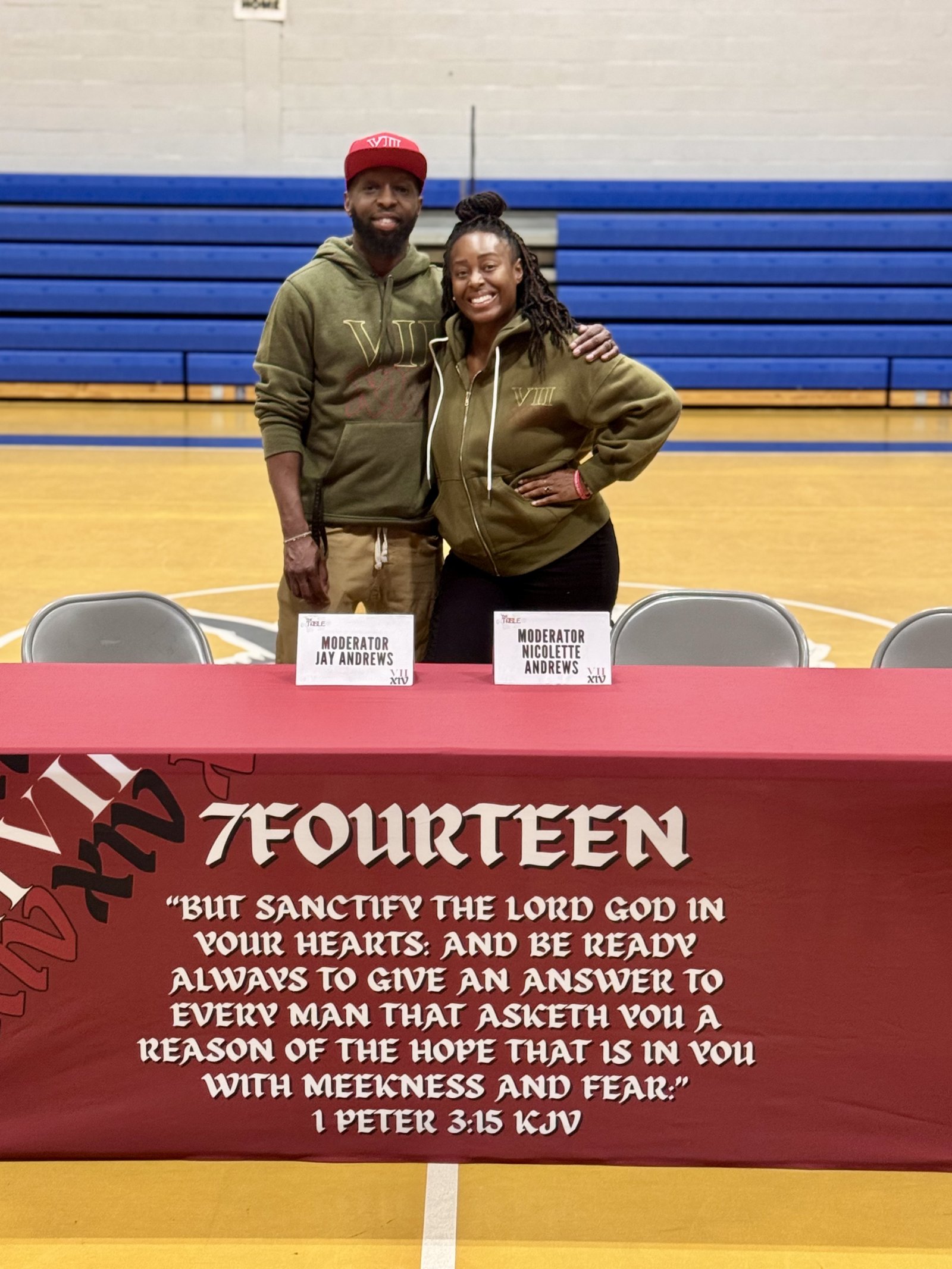
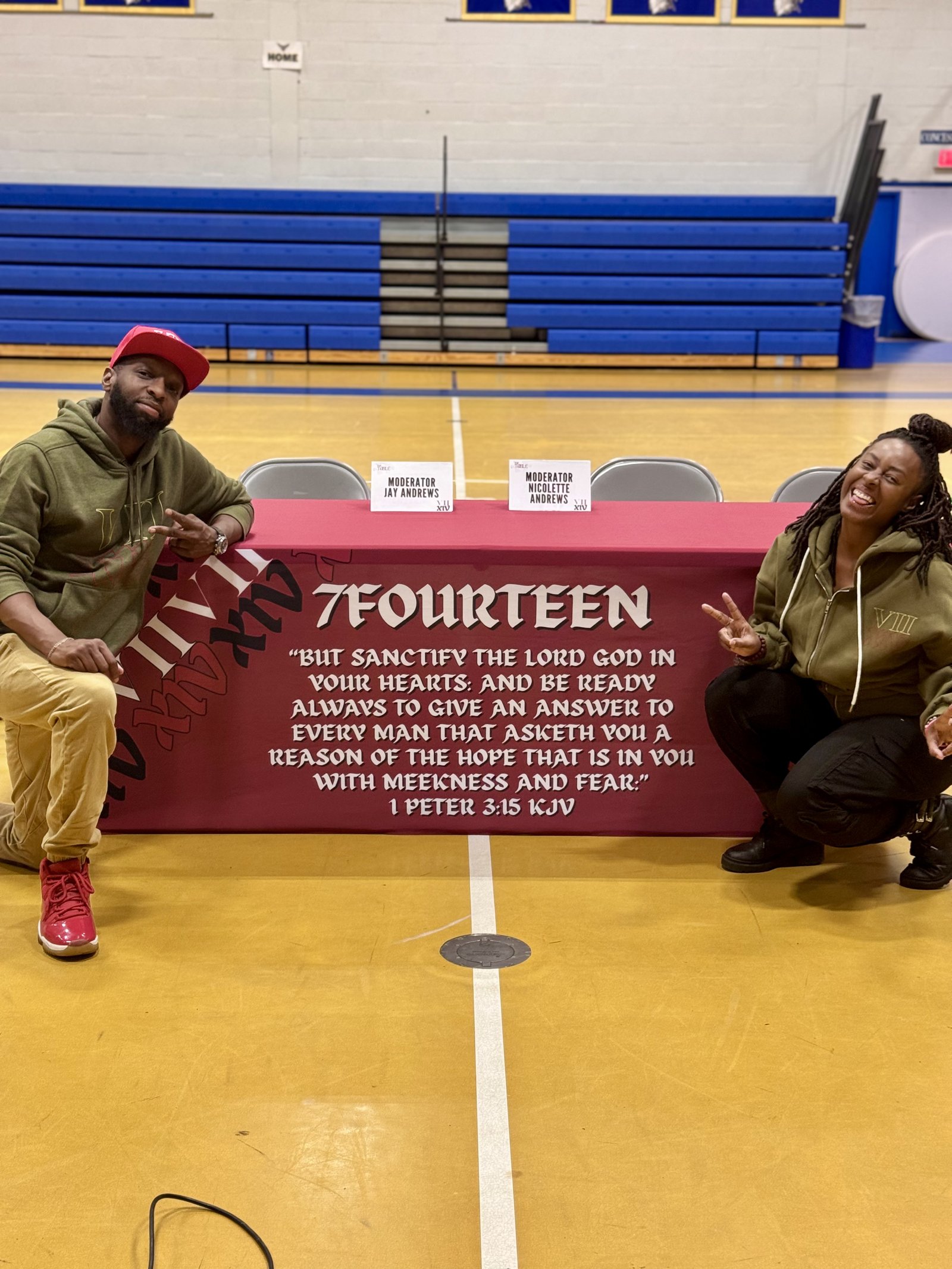
On a Friday evening in August, we set a table in the gym at Florence Christian School and invited our neighbors to sit down with the people who help run our city, county and state. From 6 to 8 p.m., over free coffee and doughnuts, Florence-area residents brought their real questions on economic development, public safety, taxes, infrastructure, education and workforce readiness, and the officials in the room answered them face to face.
This is the heart of 7Fourteen. We believe some of the most important conversations are also the most uncomfortable ones, and that we can have them without tearing each other down. Before the first question, our moderators, Jay and Nicolette Andrews, set the tone plainly.
“This is not an opportunity to attack our elected officials and appointed officials. This is an opportunity to engage and connect.”
Residents submitted their questions, and we asked them on the community's behalf. People were free to disagree, and they were asked to do it respectfully, while officials were given room to answer directly. What followed was two hours of the kind of honest, grounded dialogue we hope to keep building.
We were grateful for a panel that spanned several levels of government: Florence County Councilmen Jerry Yarborough and Andy Rodgers, Florence City Councilman Lawrence Smith, Florence 1 Schools board member Carla Eaddy, state Rep. Jay Jordan, state Sen. Mike Reichenbach and Interim Florence Police Chief Stephen Starling.
Each leader began by explaining what their office is actually responsible for, which itself cleared up a lot. Yarborough, who represents District 4, spoke to the county's work on roads, infrastructure, parks, recreation and economic development, and how growth can ease the burden on homeowners. “I'm excited about Florence County,” he said, “about the way Florence County is moving, how we're growing and how we're partnering with everybody.” Rodgers spoke up for the rural areas, from dirt-road maintenance to preserving the character of the county. “When rural leaves, it's gone forever,” he said.
Smith described how City Council sets policy and gives direction to the city manager, and reflected on watching East, North and West Florence grow. Eaddy said the school board's job is to set policy that gives students equal opportunity, and shared her heart to advocate for those who feel unheard: “I want to be that voice that God has chosen to stand in the gap for the people, to let them know that somebody has their back.” Jordan walked through how a bill becomes law and described part of his job bluntly: “Job number one is to do everything I can to be a barrier to stop all the bad ideas.” Reichenbach spoke about child welfare and investing in young people, sharing that his biological mother was 14 when she had him and that he was later adopted. “It's not always how your life starts that determines your future,” he said.
One of the first questions came straight to the point: what did local and state governments give to attract the battery plant, and what does its pause mean for the county? Yarborough explained that South Carolina competed with several states for the project, which needed access to an interstate, an airport, a railroad, major highways, water, sewer and a regional workforce. “We actually only gave them a piece of property for them to build their building on,” he said, adding that state and federal help extended roads, water and sewer, and that the county still owns the land beneath the facility.
He said the company had invested roughly $1.2 billion and the building was about 70% to 80% complete before uncertainty over tariffs, taxes and imported material costs made a dependable financial plan hard to finish. Even so, he pointed out, the infrastructure can support other development in the industrial park. “That money is not wasted,” he said.
Chief Starling shared that violent crime in Florence was down compared to the same point the year before, while cautioning that numbers rise and fall, especially in summer. “Thankfully, our violent crime does appear to be down this year, and I'm hoping that trend continues,” he said. His deeper concern was juvenile crime, which he tied to broken homes and absent fathers. “We have mostly young men committing these crimes, and most of those men haven't got a father figure,” he said, urging pastors, relatives, churches and mentors to reach children early.
On fentanyl, he described the problem as relatively stable, and noted that wider access to Narcan may mean some overdoses never reach police or EMS. Asked whether immigration changes had affected local crime or fentanyl, he was candid: “I can't say that I see any direct correlation, at least in this area.”
Starling walked through the department's Flock license plate readers and its drone-as-first-responder program, which can put equipment over a nearby call within minutes and give officers information before they arrive. “We had to start pursuing technology to really keep up with what criminals are doing and try to stay ahead of the game,” he said. The city had ordered 36 additional cameras, bringing the total to 66. He described how the system helped locate a suspect wanted in the stabbing of a 7-year-old within 15 minutes, and stressed the need for transparency, protecting people's rights, and letting residents know officers outside of emergencies.
When the conversation turned to property taxes, the panel largely agreed that eliminating them outright is not practical, because that revenue funds schools, public safety and infrastructure. “If we lose those property tax numbers, we lose a significant part of our budget,” Smith said. The group discussed shifting some of that load toward sales tax, and Reichenbach noted preferences often track with a person's stage of life. Jordan pointed to a House effort that could eventually eliminate the state income tax, while calling for discipline: “If we don't take seriously our obligation to spend taxpayer dollars wisely and reduce that pressure on citizens, we're going to lose to the people around us.” Reichenbach put the growth pressure plainly: “We're stuffing a lot more potatoes in the same bag, and you've got to figure out how you do it so the bag doesn't eventually split.”
A resident raised safety along the corridor between Walmart and Aldi, asking about sidewalks, turning lanes and neighbors who walk or use motorized wheelchairs. Reichenbach explained that a road's state or federal designation limits what local governments can change on their own, and that SCDOT increasingly funds projects based on traffic and safety data. “When Mike and I scream, and Philip and others scream to DOT, they're going to fall back on their data,” he said, referencing state Rep. Philip Lowe.
An employer asked why some students enter the workforce without basic skills, from counting change to using Word and Excel, despite spending so much time on technology. Eaddy said the board's role is to set policy and ensure qualified teachers, but that students have to put in the work: “It's really up to the students to put the time in to be able to get where they want to go in life.” The conversation turned to parents staying engaged with assignments and grades rather than assuming understanding. As our team put it that night, “technology can't become a babysitter.” Eaddy acknowledged that not every parent has the education or tools to help at home, and that schools have to meet those students too. “I think we need to go back to the old way, but yet stick to the new technology,” she said, while Rodgers noted how hard it can be for teachers just to reach the parents of struggling students.
By the end of the night, residents had heard directly from officials at every level, and walked away with a clearer sense of who is responsible for what across city councils, county councils, the statehouse, the school board and law enforcement. That clarity, and the trust it builds, is exactly what The Table is for.
This was the first Table, and it will not be the last. We are committed to keeping these conversations going, to hearing the hearts of our community, and to meeting people right where they are. If that is a table you would like a seat at, we would love to have you.
Your gift keeps these conversations going across our communities.
Support the Mission